Truck Battery Complete Guide
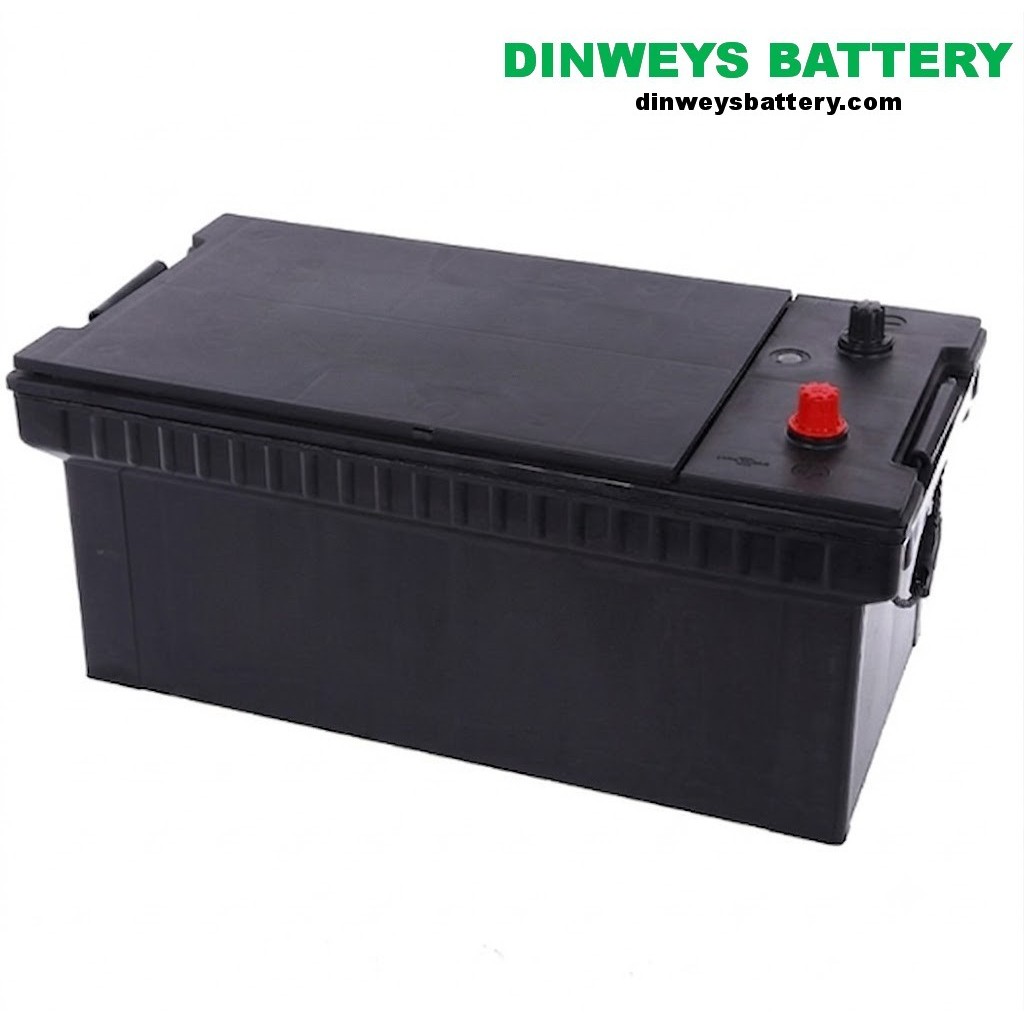
TL;DR — Choose a truck starting battery by matching four things: (1) the group size that fits your tray, (2) the CCA your diesel engine needs, (3) the system voltage (12V or 24V), and (4) your climate. In JIS markets the heavy-duty workhorses are N150/N200; in Europe they are DIN88/DIN100; in North America BCI Group 31.
Key Takeaways
- Match four specs, not one — group size, CCA, voltage and climate all have to be right; the 190H52's 1100 A CCA is worthless if its 520×278×220 mm footprint won't fit the tray.
- Diesel CCA climbs with truck class — 600–800 for light trucks, 800–1000 medium-duty, 850–1100+ for heavy semis; a gasoline-spec battery on a diesel is a winter-start trap.
- CCA and Ah measure different things — the 145G51 (N150) holds 135 Ah with 900 A CCA while the 60038 (DIN100) stores only 100 Ah at 870 A EN; starting power ≠ stored energy.
- AGM costs 1.8–2.2× flooded but cycles 3–6× longer — 600–1200 cycles vs 200–300 at 25°C; the premium pays back in harsh duty, not light duty.
- 24V means two matched 12V batteries in series — never mix models or ages, or the pair charges unevenly and falls short of the 3–5 year service norm.
What a Truck Battery Does
A truck starting battery (also called an SLI battery — Starting, Lighting, Ignition) delivers a short, high-current burst to crank a large diesel engine, then is recharged by the alternator. Unlike a deep-cycle battery, it is not designed to be deeply discharged — it is built for high cold cranking amps and fast recharge.
Step 1: Match the Group Size
The group size is the physical footprint, terminal type and terminal orientation. It must match your battery tray and cable reach.
| Standard | Market | Heavy-duty truck models | Key rating |
|---|---|---|---|
| JIS | Japan, Asia, Middle East, Africa | 145G51 (N150), 190H52 (N200) | CCA, RC, Ah |
| DIN / EN | Europe, Middle East, North Africa | 58827 (DIN88), 60038 (DIN100) | EN cold-cranking amps, Ah |
| BCI | North America, Latin America | Group 31, 8D, 4D | CCA (SAE J537), RC |
Read the label
The group size is printed on your existing battery (for example "N150" or "DIN100") and in your vehicle manual. Never guess — a battery that does not fit or has the wrong terminal orientation cannot be safely installed.
Step 2: Check the CCA Requirement
Cold cranking amps (CCA) is the current a battery can deliver for 30 seconds at −18°C (0°F) while staying above 7.2V. Diesel engines need more CCA than gasoline engines because of their higher compression.
| Truck type | Typical CCA range (guidance only) |
|---|---|
| Light truck / pickup | 600–800 CCA |
| Medium-duty truck | 800–1000 CCA |
| Heavy-duty / semi | 850–1100+ CCA |
These are general ranges. The exact requirement is printed in your manual and on the original battery label — in cold climates, err on the higher side.
Step 3: Verify the Voltage
- 12V — light trucks, pickups and most light/medium commercial vehicles
- 24V — heavy trucks, semi trailers, buses and some off-highway equipment
A 24V system is typically two 12V batteries wired in series. See our 12V vs 24V guide for the full picture.
Step 4: Account for Climate
Cold reduces battery performance, so colder climates need higher CCA. In extreme cold, consider AGM batteries, which deliver more reliable cold starts than flooded lead-acid. In hot climates, CCA is less critical and capacity (Ah) plus heat tolerance matter more.
Battery Technologies Compared
| Specification | SLI (Flooded) | EFB | AGM |
|---|---|---|---|
| Cycle life @ 25°C | 200–300 cycles | 400–600 cycles | 600–1200 cycles |
| Charge acceptance | Standard | 1.5–2.0× SLI | 2.5–3.5× SLI |
| Maintenance | Low (Ca-Ca) | Low | Maintenance-free |
| Start-stop compatible | No | Yes (entry) | Yes (full) |
| Relative cost | 1.0× baseline | 1.3–1.5× | 1.8–2.2× |
| Best use | Conventional vehicles | Mid-tier, entry start-stop | Premium, demanding duty |
Data sourced from Chengguang Power Tech Co., Ltd. technical documentation (IATF 16949 quality system).
DINWEYS Heavy-Duty Models at a Glance
| Model | Standard | Voltage | Capacity | CCA | RC | Dimensions (mm) |
|---|---|---|---|---|---|---|
| 145G51 (N150) | JIS | 12V | 135 Ah | 900 A | 220 min | 508×222×212 |
| 190H52 (N200) | JIS | 12V | 200 Ah | 1100 A | 320 min | 520×278×220 |
| 58827 (DIN88) | DIN/EN | 12V | 88 Ah | 800 A (EN) | 150 min | 353×175×190 |
| 60038 (DIN100) | DIN/EN | 12V | 100 Ah | 870 A (EN) | 170 min | 393×175×190 |
Browse the JIS heavy-duty range or DIN heavy-duty range for full specifications.
The Right Choice in One Table
| Your situation | Recommended approach |
|---|---|
| Heavy truck, JIS market | 190H52 (N200) for max CCA, or 145G51 (N150) for a smaller tray |
| Heavy truck, European market | 60038 (DIN100) for max CCA, or 58827 (DIN88) for a shorter tray |
| North American Class 7–8 | BCI Group 31 (available on request) |
| 24V system | Two matched 12V batteries of the same model in series |
| Cold / Arctic climate | Highest CCA in your group size; consider AGM |
| Fleet / bulk | OEM program with batch consistency and full documentation |
References
- Battery Council International — lead battery technology
- About lead batteries — Battery Council International
- SAE J537 (cold cranking amp test standard)
Related Guides
Battery fundamentals — explore this topic:
- What is cold cranking amps (CCA)?
- What is reserve capacity (RC)?
- CCA vs Reserve Capacity
- CCA safety margin & climate
- CCA by truck class
- What is EFB?
- AGM vs flooded
- Calcium vs antimony
- Starting vs deep-cycle
- Terminal types & orientation
- 12V vs 24V electrical systems
Related across the hub:
Frequently Asked Questions
What group size battery does my truck need?
Match the group size printed on your existing battery or in the vehicle manual. Heavy-duty trucks in JIS markets commonly use 145G51 (N150) or 190H52 (N200); European trucks use DIN88 or DIN100; North American trucks use BCI Group 31 (available on request from DINWEYS).
How much CCA does a diesel truck need?
Light trucks and pickups typically need 600–800 CCA, medium-duty trucks 800–1000 CCA, and heavy-duty semi trucks 850–1100+ CCA. These are general ranges — confirm the exact requirement in your vehicle manual and on the original battery label.
Is my truck 12V or 24V?
Light trucks and pickups use 12V. Heavy trucks, semi trailers and buses typically use 24V systems built from two 12V batteries wired in series. Check your battery compartment or manual.
What is the difference between CCA and Ah?
CCA (cold cranking amps) measures cold-start power (the amps delivered for 30 s at −18 °C); Ah (amp-hours) measures total energy storage. A battery can have 1100 A CCA but modest Ah, or vice versa — they measure different things and are not interchangeable.
How long does a truck battery last?
A heavy-duty truck battery typically lasts 3–5 years depending on climate, duty cycle, charging system health and vibration. Extreme cold or heat, deep discharges and poor charging shorten service life.
Can I mix two different batteries in a 24V system?
No. In a 24V series system, replace both batteries as a matched pair of the same model, age and rating. Mismatched batteries charge and discharge unevenly, shortening service life.